Gear Guide

Equipment & Kit Guide

From harness to carriages, whips to clothing — a practical guide to everything you need for carriage driving.

The Four Core Components

Carriage driving requires four main categories of equipment. You'll acquire these gradually — many beginners borrow or hire initially.

🪢
Essential

The Harness

The harness connects horse to carriage and includes the collar or breastplate, hames, traces, reins, bridle, breeching and back strap. Quality leather harness is a lifetime investment if well cared for. Synthetic harness is lower maintenance and suitable for everyday use.

Cost: £400–£3,000+ depending on materials and maker. A good second-hand leather set is often the best starting point.

🛒
Essential

The Carriage

Carriages range from elegant show vehicles to rugged marathon cars. For everyday use and learning, a simple easy-entry carriage or exercise vehicle is ideal. Competition drivers often own two — a show carriage for dressage and a marathon vehicle for cross-country.

Cost: £500–£15,000+ for singles vehicles. A solid second-hand training carriage can be found for £800–£2,500.

🪄
Essential

The Whip

The driving whip is an aid — not a punishment — used to communicate with the horse's shoulder or flank. It must be long enough to reach the horse without dropping the reins. Competition whips have a specific length requirement. Beginners should start with a practice whip before driving.

Cost: £30–£300. A good quality competition whip from a reputable maker lasts for many years.

Harness in Detail

Understanding the Harness

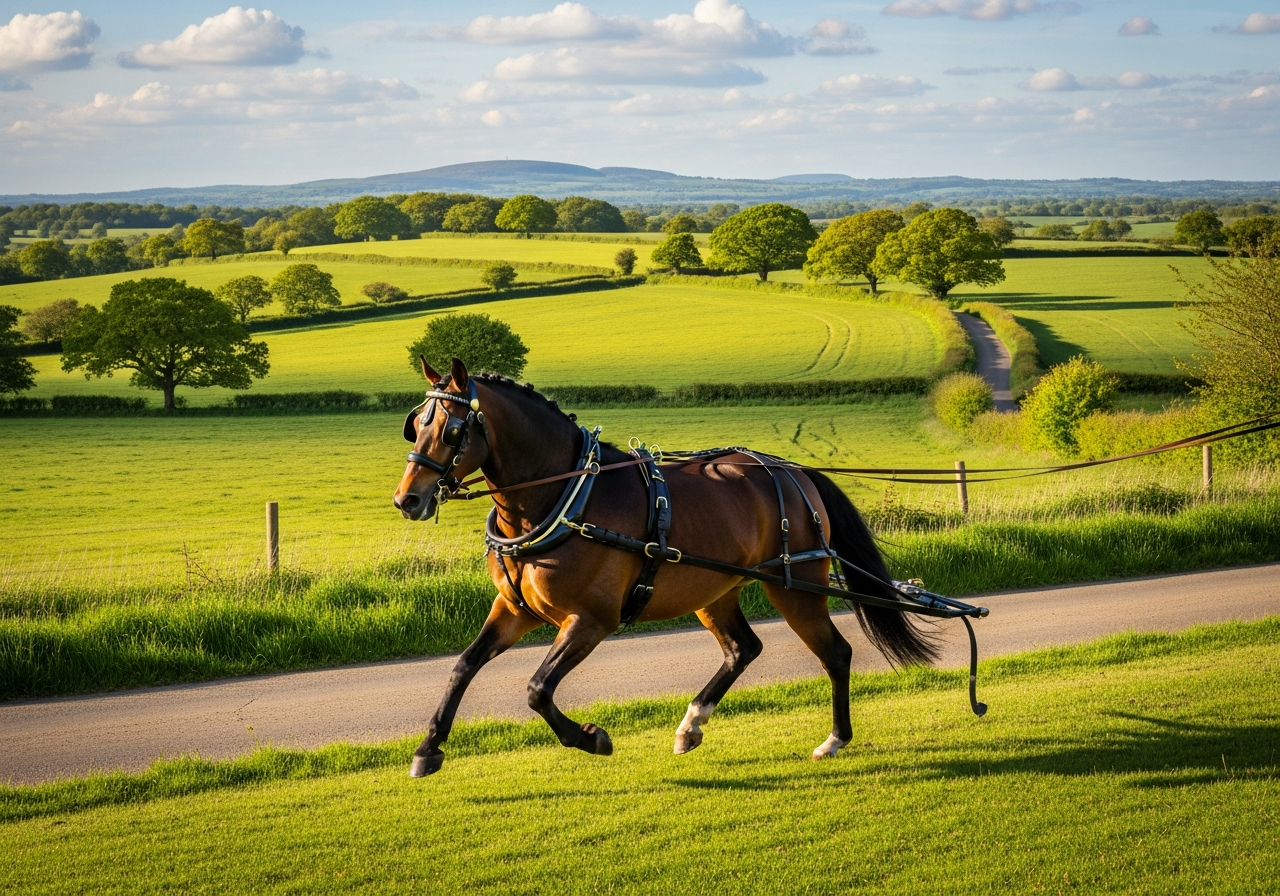
A driving harness is composed of many individual pieces, each with a specific function. The two main harness types are collar harness (with a padded collar around the horse's neck through which the hames pass) and breastplate harness (a padded plate across the chest, better for horses with difficult necks to collar-fit).

Key Components

  • Bridle with blinkers (blinkers keep the horse from seeing the vehicle behind them)
  • Collar or breastplate — the point of draught
  • Hames — metal or leather supports fitted into the collar groove
  • Traces — the straps that connect to the vehicle and take the pulling load
  • Reins — long enough to allow a loop when seated in the carriage
  • Breeching — the braking component, transfers stopping force from carriage to horse
  • Back band and saddle — supports the shafts or pole
  • Crupper — prevents the harness sliding forward
Horse in harness

Types of Carriage

🛺

Exercise Vehicle

Simple, lightweight, rubber-tyred. Ideal for training and everyday driving. Comfortable and easy to maintain.

🏆

Show Carriage

Elegant presentation vehicle for dressage and showing classes. Traditional styling, often varnished wood.

🏔️

Marathon Vehicle

Robust, manoeuvrable cross-country vehicle with groom's platform. Disc or hydraulic brakes for safety.

🌿

Pleasure Vehicle

Comfortable road vehicle — a governess car, dog cart or wagonette — for country driving with passengers.

Driver's Clothing

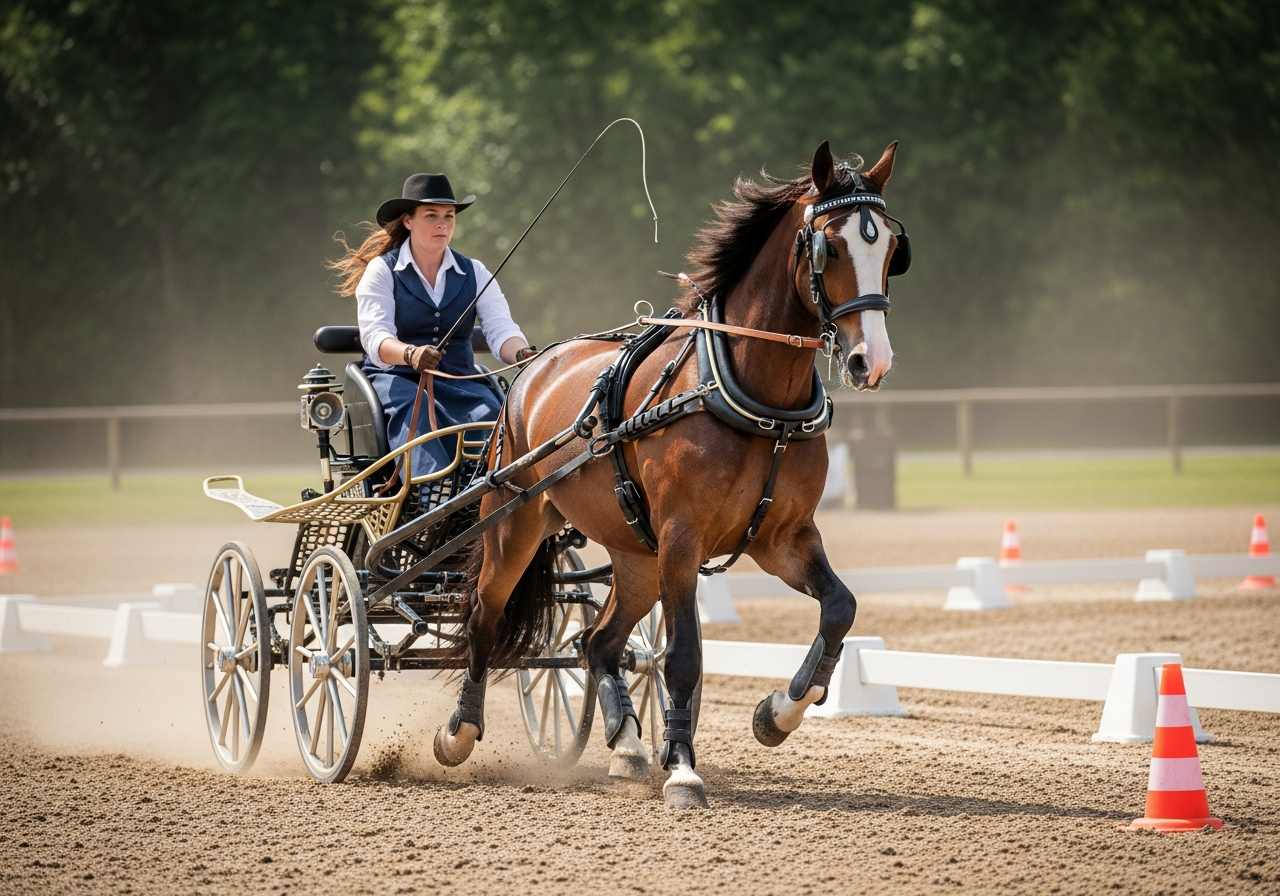
Driver in correct attire
Show & Competition Dress

Turnout & Competition Dress

At dressage and showing classes, traditional attire is expected. This typically comprises a smart overcoat or box coat, gloves, an apron, and a hat (top hat for formal classes, bowler or safety hat in others). A safety hat with chin harness is compulsory for the marathon phase at all levels.

Dressage / Show Dress

  • Formal overcoat (black, navy or brown) or box coat
  • Pale or cream driving gloves
  • Driving apron in traditional cloth
  • Top hat, bowler or smart hat (check class rules)
  • Smart trousers and polished shoes or boots

Marathon Dress

  • Safety hat with chin harness — compulsory
  • Body protector strongly recommended
  • Gloves — also compulsory
  • Practical, comfortable country clothing
  • Waterproof layer for cross-country sections

Buying Second-Hand: The carriage driving community has an active second-hand market. Facebook groups such as "Carriage Driving UK Buy & Sell", the BDS forum, and specialist saddlers are excellent places to find good quality harness and vehicles at a fraction of new prices. Always have second-hand harness checked by an expert before use.

Safety Note: Never compromise on harness condition. A broken trace or snapped rein at the wrong moment can cause a serious accident. Have your harness checked by a qualified saddler at least annually and before each competition season.