Phase Two

The Marathon Phase

The spectacular heart of combined driving — a cross-country test of horse, driver and groom across demanding terrain and thrilling hazards.

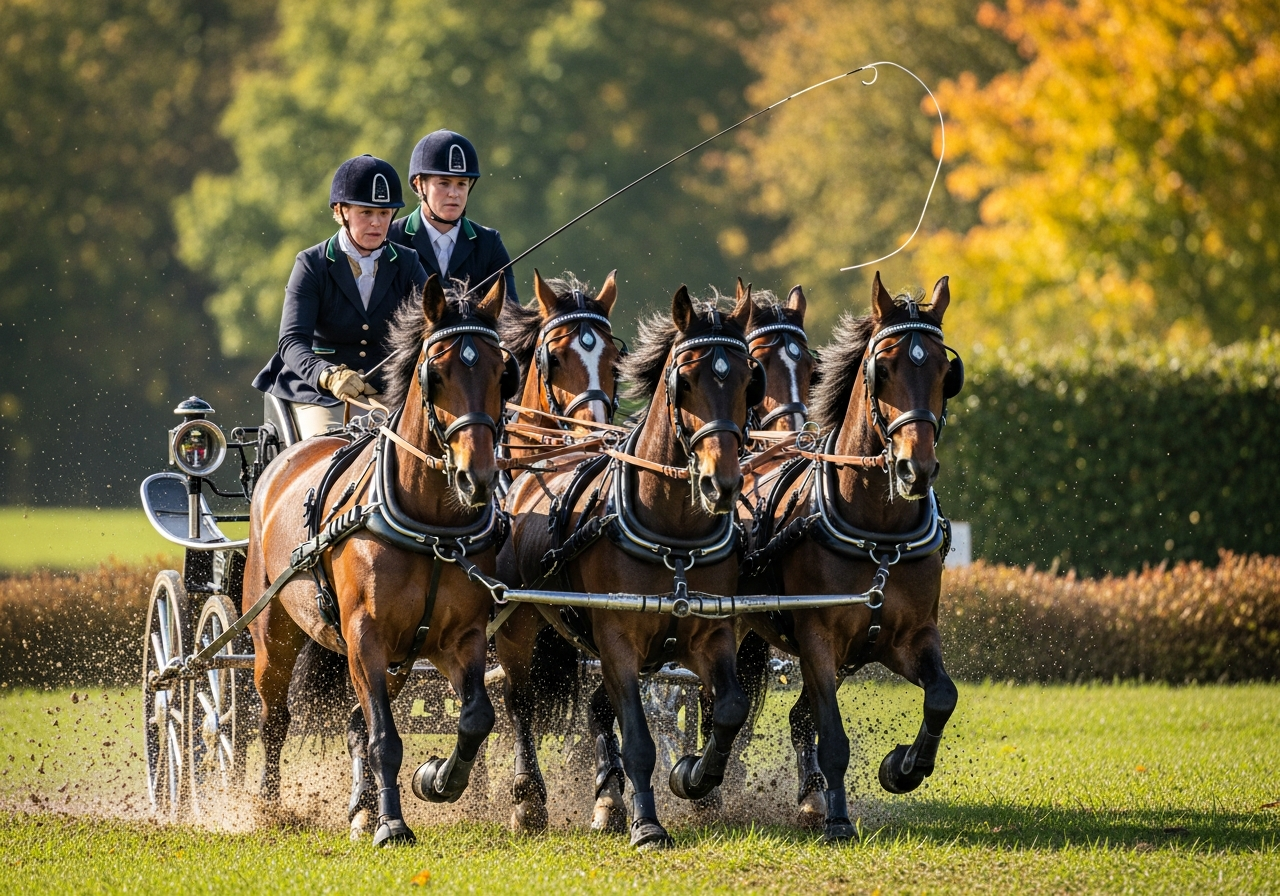
If dressage is the art of carriage driving, the marathon is its theatre. Held on the second day of a combined driving event, the marathon sees horses and carriages thunder across cross-country terrain — up hills, through water, around tight bends — before plunging into a series of technically demanding hazards that test the strategic minds of driver and groom as much as the athletic ability of the horse.

For spectators, the marathon is the reason to attend a driving event. The combination of speed, power, skill and raw athleticism is unlike anything else in the equestrian world. For competitors, it is the ultimate test of their preparation and the depth of their partnership with their horse.

Marathon carriage driving
Structure

How the Marathon is Structured

The marathon course at a typical UK event covers between 8 and 22 kilometres depending on the level of competition. The course is divided into sections, traditionally labelled A through E, each with a prescribed speed and maximum time allowance.

Section A is typically a warm-up road section at walk or slow trot — a chance to settle the horses and check equipment before the fast sections begin. The main action happens in Section E, where the hazards are located. This section is driven at competition pace with the clock running throughout.

At novice and club level, the marathon may be condensed into a single timed section with four to six hazards. At international level, the course can include eight or more hazards spread across a demanding cross-country route with significant elevation changes and challenging going.

How Hazards Work

Marathon hazards are the defining feature of the phase — and the reason spectators line up three deep at the best vantage points. Each hazard is a natural or constructed obstacle set up within a defined boundary, through which the driver must navigate a set sequence of lettered gates in the correct order.

Gates are marked with red and white flags (red on the right, white on the left as you pass through them, in the correct direction). The sequence is published in the course notes and drivers must memorise the route through each hazard during the course walk.

Hazard penalties are awarded for: missing a gate (error of course), knocking down a flag marker, exceeding the maximum time allowed in the hazard, or groom falling off or dismounting incorrectly. The aim is to negotiate the entire sequence as quickly as possible within the rules.

Modern hazards are often built with natural materials — logs, stone walls, brushwood — and may incorporate water features, steep banks or tight chicanes between large wooden structures. The best hazard designers create puzzles that have multiple possible routes, rewarding the driver who has prepared the best strategy on the course walk.

Three Key Roles in the Marathon

The marathon is a team effort. Horse, driver and groom must each perform their role to achieve a clean, fast round.

Athlete

The Horse's Fitness

The marathon makes serious physical demands on the horse. A horse that is inadequately prepared will tire before the end of the course, becoming slower in hazards, less responsive to the driver's aids and at greater risk of injury. A proper fitness programme — building over weeks with roadwork, hills and gradually increasing distance — is essential. Most horses need a minimum of eight weeks of targeted fitness work before a marathon.

Strategist

The Driver's Role

The driver is responsible for pace management across the whole course, strategic decision-making in hazards, and keeping calm under pressure. Walking the course thoroughly — ideally twice — is non-negotiable. In each hazard, the driver must have a primary route and a backup plan. Decisions in hazards happen at speed; there is no time to think from scratch once you're committed.

Partner

The Groom's Role

In combined driving, the groom sits on the back of the carriage and is a critical active participant — not a passenger. The groom shifts their weight dramatically through corners and around hazard elements to help balance the carriage and prevent it from tipping. A skilled groom can make a measurable difference to a driver's time in hazards. Groom and driver must practise together extensively before competing.

Eight Tips for a Successful Marathon

"There is nothing in equestrian sport quite like the moment your horse flies into a water hazard at speed, spray erupting in all directions, the carriage tipping and swaying as you pick your line through the gates. It is total exhilaration — and absolutely addictive."

Safety at Hazards

Marathon hazards carry the highest risk in carriage driving. An approved safety helmet (PAS 015 or equivalent) and body protector are compulsory for all drivers and grooms during the marathon phase. Never enter a hazard without being confident in your route. If in doubt about a line, take the longer, safer option — a few extra seconds is far preferable to a capsize or a horse that loses confidence. Know where the nearest hazard steward is positioned and follow their instructions if an emergency occurs.