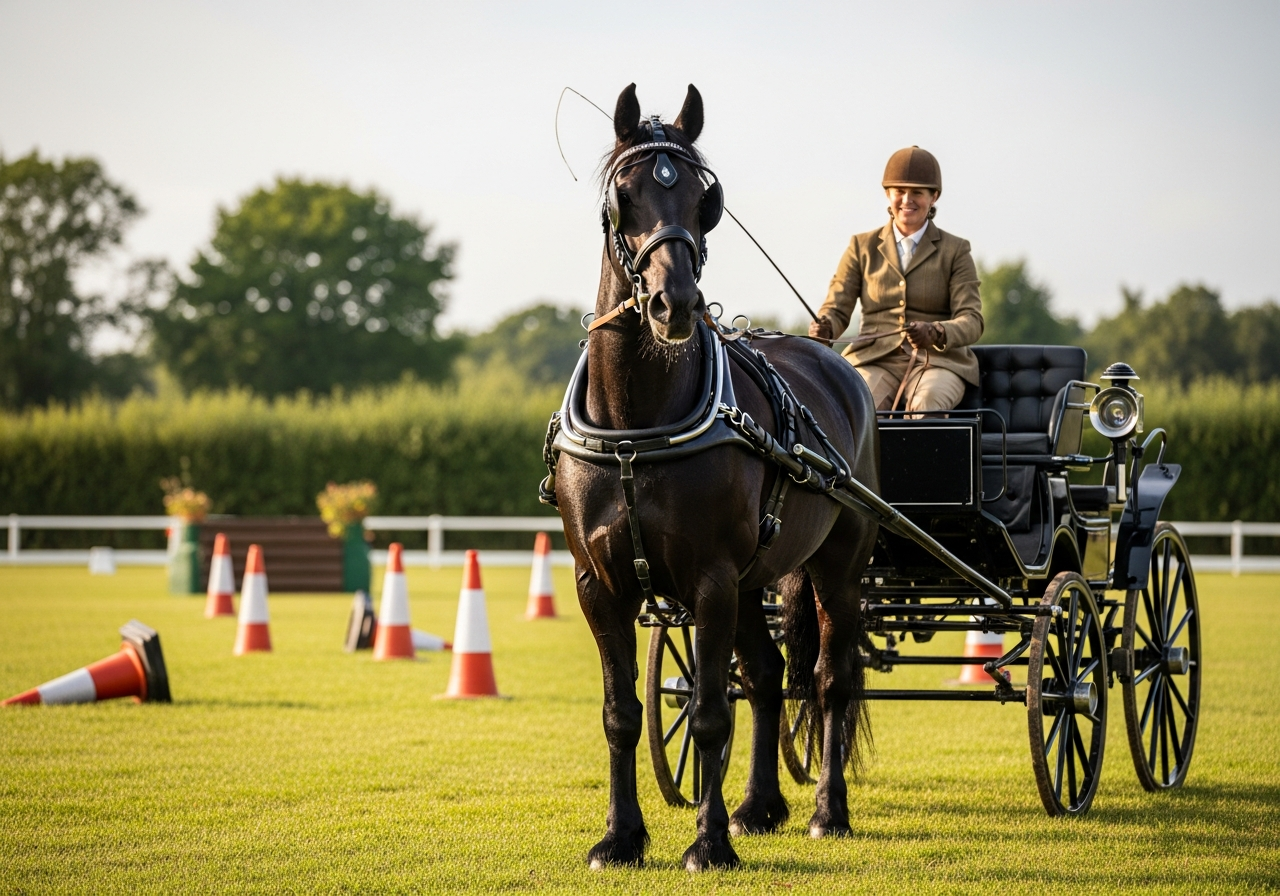
Good coaching is the fastest, safest route to becoming a confident driver. Here's how to find the right trainer for you.
The importance of good coaching in carriage driving cannot be overstated. Unlike some activities where self-teaching is reasonably practical, carriage driving involves a live animal, a vehicle, public roads and potentially dangerous situations. Learning from a qualified, experienced instructor is not just faster — it is genuinely safer.
A good trainer will teach you the correct rein hold from your first lesson, preventing bad habits that take years to undo. They will spot and correct problems with your horse's way of going before they become ingrained. And they will introduce you to new challenges — road driving, competition preparation, pairs work — at a pace that builds confidence rather than overwhelming it.
The British Driving Society maintains a directory of approved coaches searchable by region and qualification level. This is your first port of call. All coaches listed have been assessed by the BDS and hold current coaching qualifications. Visit bhs.org.uk or search online for "BDS trainer finder" to access the directory.
Verify that the trainer holds a current BDS coaching qualification — Coach, Senior Coach or Master Coach. Also check that they hold current first aid certification, which is a requirement for BDS-registered coaches. Ask specifically whether their qualification is current and whether they carry professional indemnity insurance. Legitimate coaches will answer these questions readily.
Not all coaches have experience with every breed or class of driving. If you have a Welsh Cob, ask whether the coach has experience with native breeds. If you want to compete, ask whether they have competition coaching experience. If you drive a pony rather than a horse, check they are comfortable with pony work. Matching the coach's experience to your specific needs will accelerate your progress significantly.
Before committing to a series of lessons, book a single trial session. This lets you assess the coach's teaching style, how they relate to your horse and whether the environment feels safe and well-organised. Pay attention to how they give feedback — do they explain the reasoning behind corrections? Do they make you feel encouraged? Trust your instincts about whether this person is the right fit.
Occasional lessons produce occasional results. The drivers who improve fastest are those who have regular coaching — ideally fortnightly or monthly at minimum — and who set clear goals with their trainer for each phase of their development. Discuss your aims honestly with your coach so they can structure a progressive programme tailored to where you want to go.
The BDS coaching pathway exists to ensure that anyone teaching carriage driving has been formally assessed for both technical knowledge and teaching ability. Coaches must also demonstrate an understanding of horse welfare and safe coaching environments.
A BDS Coach (the entry-level qualification) is assessed on their ability to teach beginners and novices safely. They will have a solid grounding in driving technique, harness fitting and basic horse management. They are appropriate coaches for drivers in the early years of their journey.
A BDS Senior Coach has broader experience and can teach across a wider range of levels, including pairs work and early competition preparation. A BDS Master Coach — the highest award — has demonstrated exceptional technical knowledge and typically has a significant background in high-level competition. Master Coaches are the right choice for serious competitors.
Whether you're a complete beginner or an experienced driver seeking to improve, here's what good coaching looks like.
Expect to spend the first part of your initial lesson on the ground — being shown how harness works, understanding rein holds and asking questions. You'll then sit alongside your trainer initially rather than driving alone. The aim is to absorb the fundamentals without feeling overwhelmed. A good first lesson leaves you wanting to come back, not worrying you've been in over your head.
Private lessons with a BDS-qualified coach typically cost £60–£120 per hour, depending on the coach's qualification level and location. Group lessons at a driving centre or club typically cost £25–£50 per person. Taster sessions that include the use of a horse and vehicle typically run £50–£90 for 90 minutes. Some coaches charge travel expenses for visiting your own yard, so check this in advance.
Yes — group lessons are excellent, particularly in the earlier stages of learning. Watching others be coached is itself a powerful learning tool. Many driving clubs organise regular group training days with BDS-qualified coaches. The lower cost per person makes regular attendance more financially accessible than frequent private lessons. As your ambitions develop, private lessons become more valuable for addressing specific issues and competition preparation.
No — many driving centres and training yards have their own schoolmaster horses that are well-suited to teaching beginners. Learning on an experienced, reliable horse is often better than learning on your own horse, which may itself be a novice. Once you have a solid foundation, transitioning to your own horse with your trainer's support is a natural next step. Some trainers will also come to your yard to teach you on your own horse from the beginning.
Fully online lessons are not practical for the hands-on, safety-critical early stages of learning to drive. However, many coaches now offer video analysis sessions — you film your driving, send it to the coach, and receive a detailed video or written critique. This is a valuable supplement to in-person coaching and a cost-effective way to get additional feedback between lessons. Some coaches also run theory workshops online covering topics like harness fitting, horse selection and competition preparation.