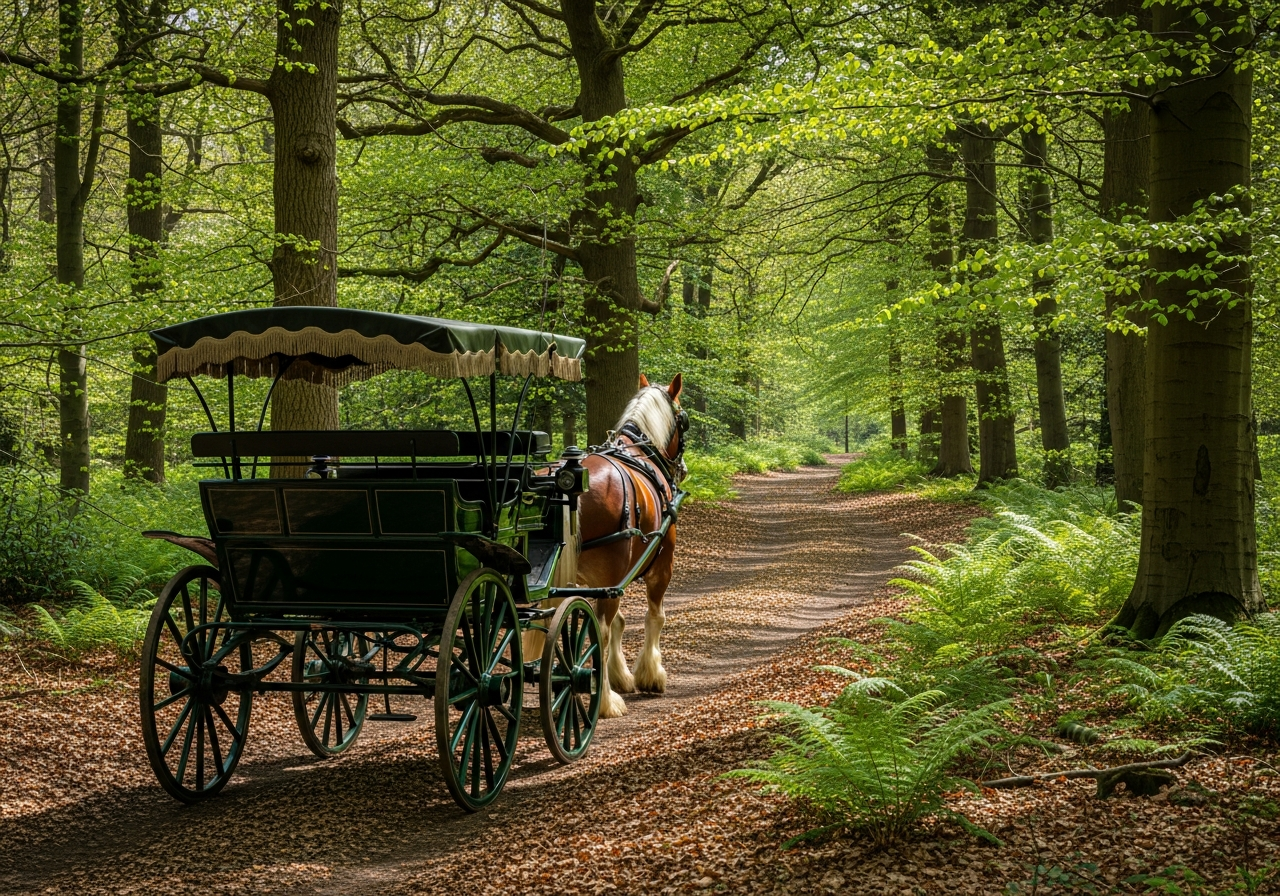
Not every drive needs a scoreboard. Pleasure driving is the quiet, unhurried heart of the carriage driving world.
Carriage driving is often thought of as a competitive sport, but the truth is that the vast majority of the thousands of people who drive horses and ponies across Britain do so purely for the pleasure of it. No timers, no judges, no scorecards — just a horse, a carriage, a quiet lane and the British countryside rolling by at the gentle pace of a horse's trot.
Pleasure driving is accessible to almost everyone with a suitable horse and vehicle. It is peaceful, it is social when done in company, and it offers a uniquely unhurried way to experience the landscape. Many drivers who begin with competition ambitions discover that they love pleasure driving just as much — and many who begin as pleasure drivers find competition creeping up on them irresistibly.
There is something almost uniquely restorative about a pleasure drive through the British countryside. At a horse's walking pace, the world slows down. You notice things that speed hides — the smell of a hedgerow in flower, the sound of a stream below a stone bridge, the swallows darting low over a summer meadow.
Unlike riding, pleasure driving is a comfortable, sociable activity. Two or three people can share a carriage and conversation flows naturally. There is no helmet pressing on your ears, no wind drowning out speech. On a carriage, you can talk, laugh and enjoy the company of friends while your horse does the work.
Britain's network of country lanes, bridleways and estate roads offers extraordinary driving terrain. From the moorland tracks of Dartmoor to the estate roads of Perthshire, from the quiet lanes of the Cotswolds to the coastal paths of Pembrokeshire, the pleasure driving landscape of the United Kingdom is genuinely world-class.
Pleasure driving is not one thing but many — from a solo trot along a favourite lane to an organised drive through a National Park with fifty other carriages.
The most common form of pleasure driving — harnessing up and heading out alone along local lanes and roads. Requires a traffic-proof horse, safe harness and vehicle, and good road sense. Many drivers have a favourite circular route of 5–15 miles that they drive regularly, varying pace and route with the seasons.
The British Driving Society and its regional clubs organise pleasure drives throughout the season — typically from spring to autumn. These are guided group drives along pre-planned routes, usually 10–25 miles, through attractive countryside. Participants drive at their own pace with the group providing safety in numbers and excellent company.
The UK's National Parks offer extraordinary pleasure driving opportunities. The New Forest's wide, quiet roads, the Dartmoor lanes, the Forest of Dean tracks and Brecon Beacons routes are all popular with pleasure drivers. Many areas have specific waymarked driving routes or traditional driving routes that have been used for generations.
Charity carriage drives are popular events that combine the pleasure of group driving with fundraising for good causes. Participants pay a registration fee, drive a set route through attractive countryside and enjoy a social lunch or supper at the end. A wonderful way to meet other drivers and contribute to charity simultaneously.
A growing number of country house hotels, estates and visitor attractions offer guided carriage drives as an activity for guests. These range from half-hour introductions through estate grounds to full-day driving experiences through private parkland. An excellent way to experience driving without owning a horse.
The British Driving Society organises a full calendar of pleasure drive events throughout the UK driving season. These are not competitive — there are no judges, no scores, no winners. They are simply an opportunity for drivers at every level to enjoy a beautiful day out with their horses and other like-minded people.
Organised pleasure drives are typically led by experienced marshals who know the route and can assist if any difficulties arise. A social element — lunch in a pub or tea at a farm — is almost always included, making these events as much about community as about driving.
Many clubs also run informal group drives throughout the year — just a WhatsApp message to members and a meet at a local car park. These less formal events are particularly welcoming to newcomers and are often the best way to build local driving friendships quickly.
Britain's diverse landscape offers something different in every region — here are just a few highlights.
The Scottish Borders offer spectacular driving country — wide estate roads, quiet B-roads through river valleys and forest tracks. The Floors Castle estate and Bowhill estate both welcome carriage drivers. Further north, Perthshire's country roads and Speyside's forest tracks provide unforgettable driving in dramatic Highland scenery.
England's country lane network is one of the finest in the world for pleasure driving. The Cotswolds, Devon, the New Forest, the Lake District and the North York Moors all offer exceptional routes. Many National Trust estates provide access to their road networks for horse-drawn vehicles — check individual properties for their current policies.
Wales combines stunning mountain scenery with a deeply rooted driving culture — the Welsh Cob and its native terrain are inseparable. The Brecon Beacons, the Pembrokeshire Coast and mid-Wales all have excellent quiet roads and bridleways. The National Park authorities in Wales are generally sympathetic to horse-drawn vehicle access on appropriate routes.
"There is no finer way to begin a summer's day than to set out at seven in the morning, horse's breath steaming in the cool air, the lane ahead empty and the world entirely your own. That first mile of a long pleasure drive — before the day has fully woken — is worth everything."