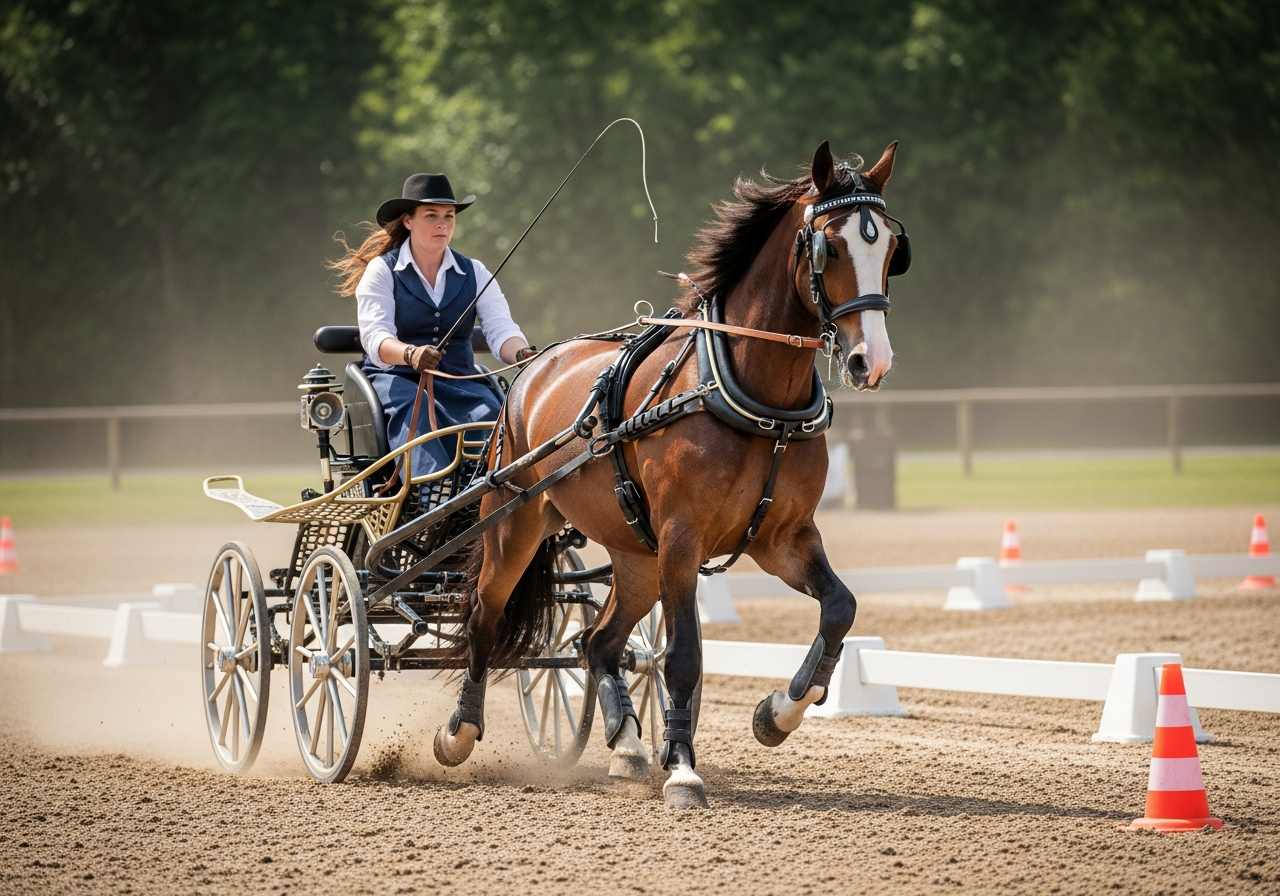
Coaching

Training & Lessons

Structured coaching is the fastest, safest route to becoming a competent and confident carriage driver.

Carriage driving has a clear and logical learning progression. Unlike some equestrian disciplines where natural talent can carry you a long way, driving requires a structured understanding of rein technique, horse psychology and vehicle management that only comes with good teaching and consistent practice.

The good news is that the British Driving Society has an excellent coaching structure, and there are qualified instructors spread across the country who can take you from your very first lesson all the way through to competition readiness. Progression in the sport is deeply satisfying — each new skill unlocks new possibilities.

Seven Stages of Progression

  1. Learning to Hold the Reins

    The foundation of everything. Driving reins are held differently from riding — typically in one or both hands depending on the style — and the feel of communicating with a horse through long reins rather than direct contact takes time to develop. Your first lessons will focus entirely on rein technique, hand position and understanding how very subtle changes in rein pressure affect the horse.

  2. Arena Work and Basic Schooling

    Once you have the basics of rein handling, your trainer will introduce you to arena work: circles, figures of eight, transitions between walk and trot, and simple school figures. This teaches you to plan ahead, use the arena space effectively and develop a feel for your horse's rhythm and balance.

  3. Road Training and Hacking

    Driving on public roads introduces a new set of skills: reading traffic, giving clear signals, choosing the correct road position and managing your horse's reaction to passing vehicles, dogs and other hazards. Always drive with an experienced driver the first several times you go on the road, and ensure your horse is fully traffic-proof before venturing out alone.

  4. Advanced Schooling Techniques

    As your communication with the horse improves, your trainer will introduce more demanding movements: rein-back, shoulder-in, extended and collected paces. You'll also learn to use the whip as a positive aid — not a punishment — and to improve the quality of your horse's transitions.

  5. Competition Preparation

    If your aim is competition, your trainer will help you prepare dressage tests, walk cross-country courses and practice cone courses. You'll learn how to warm up efficiently at shows, manage your time across phases and handle the inevitable nerves that come with competition.

  6. Working with Pairs

    Driving a pair of horses introduces significantly more complexity. You now have eight reins (or four, depending on harnessing style), two horses with potentially different temperaments, and need to keep them working together as a balanced unit. Most trainers recommend at least two years of confident single driving before attempting a pair.

  7. Four-in-Hand

    The pinnacle of the art. Driving four horses requires mastery of a complex rein system, deep understanding of each individual animal, and years of experience. Top-level four-in-hand drivers are universally respected in the equestrian world. It is a long-term ambition worth aspiring to — but one that demands genuine dedication.

Carriage driving lesson
Your First Lesson

What to Expect in Your First Driving Lesson

Most first lessons last between 60 and 90 minutes. You'll typically begin on foot beside the horse, learning how harness works and what each piece does. Your trainer will explain the rein hold, the function of the whip and the basic principle of communicating with the horse at a distance.

Then you'll sit in the carriage — probably alongside your instructor initially — and get your first feel of the reins with a calm, experienced horse. Don't expect to be driving solo on your first lesson; the aim is simply to absorb the fundamentals and get comfortable with the unusual sensation of controlling an animal you cannot see directly.

Wear comfortable clothes and sturdy, flat-soled boots. Bring gloves — driving gloves or leather work gloves are ideal — as rein work can be tough on unconditioned hands. Most driving centres supply a hat if you don't have one, but check in advance.

BDS Coaching Qualifications

The British Driving Society operates a rigorous coaching pathway to ensure you learn from genuinely qualified instructors.

Entry Level

BDS Coach

The foundation BDS coaching award. Holders have demonstrated competence in teaching beginner and novice drivers in a safe, structured environment. They will have undergone assessment by senior BDS examiners and hold current first aid certification. An excellent starting point for most learners.

Intermediate

BDS Senior Coach

Senior Coaches have extensive experience teaching across a broad range of levels, from beginners through to intermediate competitors. They can coach pairs work and have typically competed at a reasonable level themselves. Look for a Senior Coach if you have competition ambitions.

Elite

BDS Master Coach

The highest BDS coaching award. Master Coaches have demonstrated exceptional technical knowledge, teaching ability and typically have a background in high-level competition. They can coach four-in-hand, assess other coaches and are involved in developing the sport at national level.

Ways to Learn

Different lesson formats suit different learners and budgets. Here's a comparison of the main options available.

Shared Cost

Group Lessons

Many driving clubs and training centres run group lessons with 3–6 participants. Cost per person is typically £25–£45 per session. Group lessons are excellent for social motivation, learning from watching others and developing a feel for different horses. They are ideal in the earlier stages of learning.

One to One

Private Lessons

Private lessons offer undivided attention from your trainer and allow the lesson to be tailored precisely to your horse, your goals and your current challenges. Typically £60–£120 per hour depending on the trainer's level and location. Faster progress but at a higher per-session cost. Essential for competition preparation.

Immersive

Residential Courses

Several specialist driving centres across the UK offer residential courses of 2–5 days. These are the most intensive and often most transformative learning experiences available. Typical cost is £300–£800 including accommodation and use of horses and vehicles. Recommended if you want to accelerate your development quickly.

Frequently Asked Questions

How many lessons do I need before I can drive independently? +

This varies enormously depending on natural aptitude, how often you practise and whether you have your own horse to work with between lessons. A realistic minimum before driving a calm, experienced horse independently in a controlled environment is around 10–15 hours of structured instruction. Before driving on public roads alone, most experienced trainers recommend a minimum of 20–30 hours of supervised driving.

How much does a carriage driving lesson cost? +

Private lessons with a BDS-qualified coach typically cost £60–£120 per hour, depending on the trainer's qualifications and location. Group lessons are cheaper at £25–£45 per person. Taster sessions at driving centres, which include horse and vehicle, usually cost £50–£90 for 90 minutes. Travel expenses may be charged for coaches who come to your yard.

Can I learn to train my own horse to drive? +

Yes — but you should be an experienced driver first. Breaking a horse to harness is a skilled process that involves careful groundwork, long-reining, then introducing the horse to the vehicle progressively. Done incorrectly it is dangerous. Most coaches who specialise in producing young driving horses will train both horse and owner together over a series of sessions. We strongly recommend attending a specialist training-the-trainer course run by a BDS Master Coach before attempting this yourself.

Is there a best age to start learning carriage driving? +

Carriage driving is genuinely one of the most age-inclusive equestrian sports. Juniors can start from around 12 years old with the right supervision. Many people come to driving in middle age or later, including those who can no longer ride. The British Driving Society has active junior sections and senior sections, and it is not unusual to find competitive drivers well into their seventies.